The Silent Clowns: Chaplin, Keaton, Lloyd and the Engineering of a Pratfall
Before the talkies silenced their physical poetry, Charlie Chaplin, Buster Keaton, and Harold Lloyd elevated slapstick to an art form. Their meticulous choreography of chaos redefined what comedy could be, making every tumble a triumph of timing and character.
Long before CGI made impossible feats commonplace, before scripts were packed with witty one-liners, three silent titans of comedy – Charlie Chaplin, Buster Keaton, and Harold Lloyd – were painstakingly crafting cinematic chaos, transforming the humble pratfall into a high art. Their genius didn't just lie in falling down; it was in the intricate engineering of the fall, making every tumble a precise, character-driven masterwork that still resonates a century later.
Comedy, of course, had always been physical. From the masked mayhem of commedia dell'arte to the music hall and vaudeville stages, a well-timed trip or a pie to the face was a reliable laugh-getter. But when the camera arrived, these pioneers saw more than just an opportunity for recorded gags. They saw a canvas for visual poetry, an unspoken language where a character's entire world could unravel with a slipped banana peel or an unfortunate collision. They honed their craft in an era when the rules of screen comedy were being written, establishing a grammar of physical action that would influence every comedian, stunt performer, and filmmaker who followed.
The Poet of Pain: Charlie Chaplin
Charlie Chaplin’s Little Tramp, a character born from the rough-and-tumble of British music halls and refined through early Keystone shorts, embodied the pathos and resilience of the human spirit in every graceful misstep. Chaplin, with his balletic sensibility, elevated the pratfall from crude slapstick to a dance of dignity under duress. His falls weren't just for laughter; they were extensions of his character's perpetual struggle, a visual punctuation of his gentle defiance against an indifferent world. Whether he was slipping on a roller skate in a department store, attempting to lasso a runaway ostrich in
The Architect of Accidents: Buster Keaton
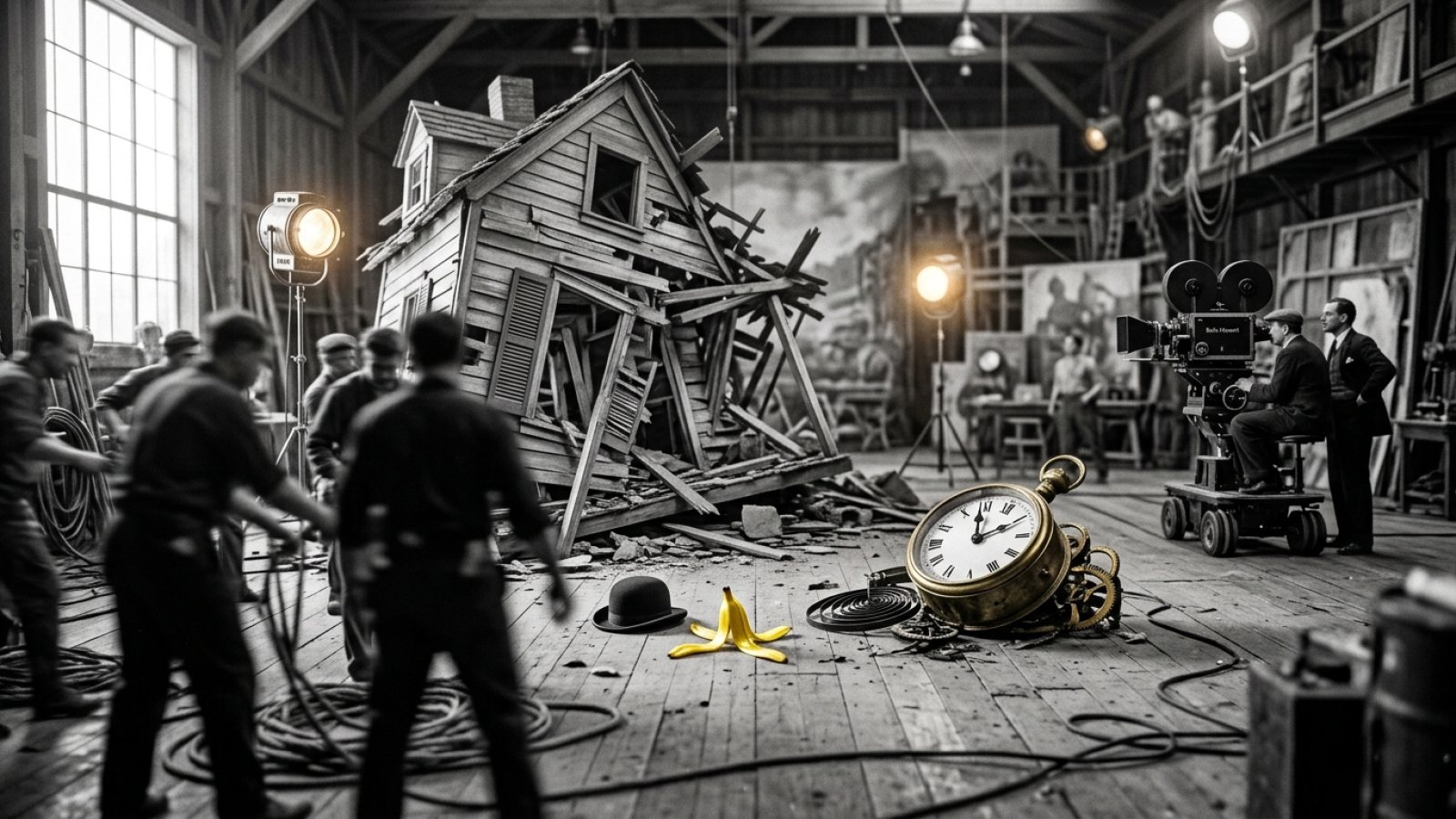
Where Chaplin was poetry, Buster Keaton was pure mathematics. “The Great Stone Face” was a virtuoso of the deadpan, performing some of the most elaborate and dangerous stunts ever committed to film. His childhood in a family vaudeville act, where he was famously thrown around like a ragdoll, instilled in him an unparalleled understanding of momentum, timing, and structural integrity. Keaton didn't just fall; he orchestrated grand-scale disasters, turning entire environments into Rube Goldberg machines of comedic consequence. His falls were precise, almost scientific, often involving collapsing houses, runaway trains, or perilous leaps. Consider the iconic sequence in
The Thrill-Seeker: Harold Lloyd
Harold Lloyd, the third pillar of silent comedy, brought a relatable everyman quality to his meticulously crafted physical gags. His signature "glasses character" was an ambitious, earnest young man striving for success, and his comedy often stemmed from the high-stakes predicaments he'd stumble into. Lloyd was a pioneer of “thrill comedy,” integrating hair-raising stunts with humor. His most famous sequence, hanging from a clock face high above a bustling city street in
The Legacy of Leaps and Landings
These three masters, each with their distinct style, shared an unwavering dedication to the craft. They understood that physical comedy was not just about impact, but about rhythm, build-up, and release. They performed many of their own dangerous stunts, often sustaining injuries, all in pursuit of the perfect laugh. They weren't just comedians; they were filmmakers, directors, and choreographers who understood the mechanics of the human body and the psychology of an audience. Their influence stretched across the decades, paving the way for physical comedians like Jerry Lewis, Jacques Tati, and Rowan Atkinson, and shaping the stunt work seen in films from Jackie Chan to contemporary blockbusters.
The silent clowns proved that laughter doesn't need words. It needs vision, precision, and an almost obsessive commitment to the art of the fall. Their films remain a testament to the universal language of physical comedy, a blueprint for how a simple trip or tumble, when expertly engineered, can move us, thrill us, and make us laugh until our sides ache, a hundred years on.
