When I Love Lucy premiered on October 15, 1951, television was still a nascent medium, largely a live, ephemeral experience. Most shows flickered out into the ether, or if recorded at all, were captured on grainy kinescopes – flimsy film recordings of a broadcast monitor, destined for fuzzy, limited re-airings. But this new show, starring a red-headed force of nature and her Cuban bandleader husband, arrived with a technical innovation that didn't just capture comedy; it bottled it, preserved it, and ultimately, made it eternal.
A New Way to See the Joke
Before I Love Lucy, early television comedy often struggled to translate the vibrant energy of the stage or the intimate humor of radio. Live single-camera broadcasts, often shot from a static perspective, meant disjointed edits or long, theatrical scenes that lacked the dynamism needed for the small screen. Lucille Ball and Desi Arnaz, already a sensation from Ball’s radio show My Favorite Husband, recognized these limitations. They insisted on filming their show in Hollywood, a stark contrast to the prevailing practice of live broadcasts from New York, which then had to be clumsily preserved on grainy kinescopes for delayed viewing on the West Coast.
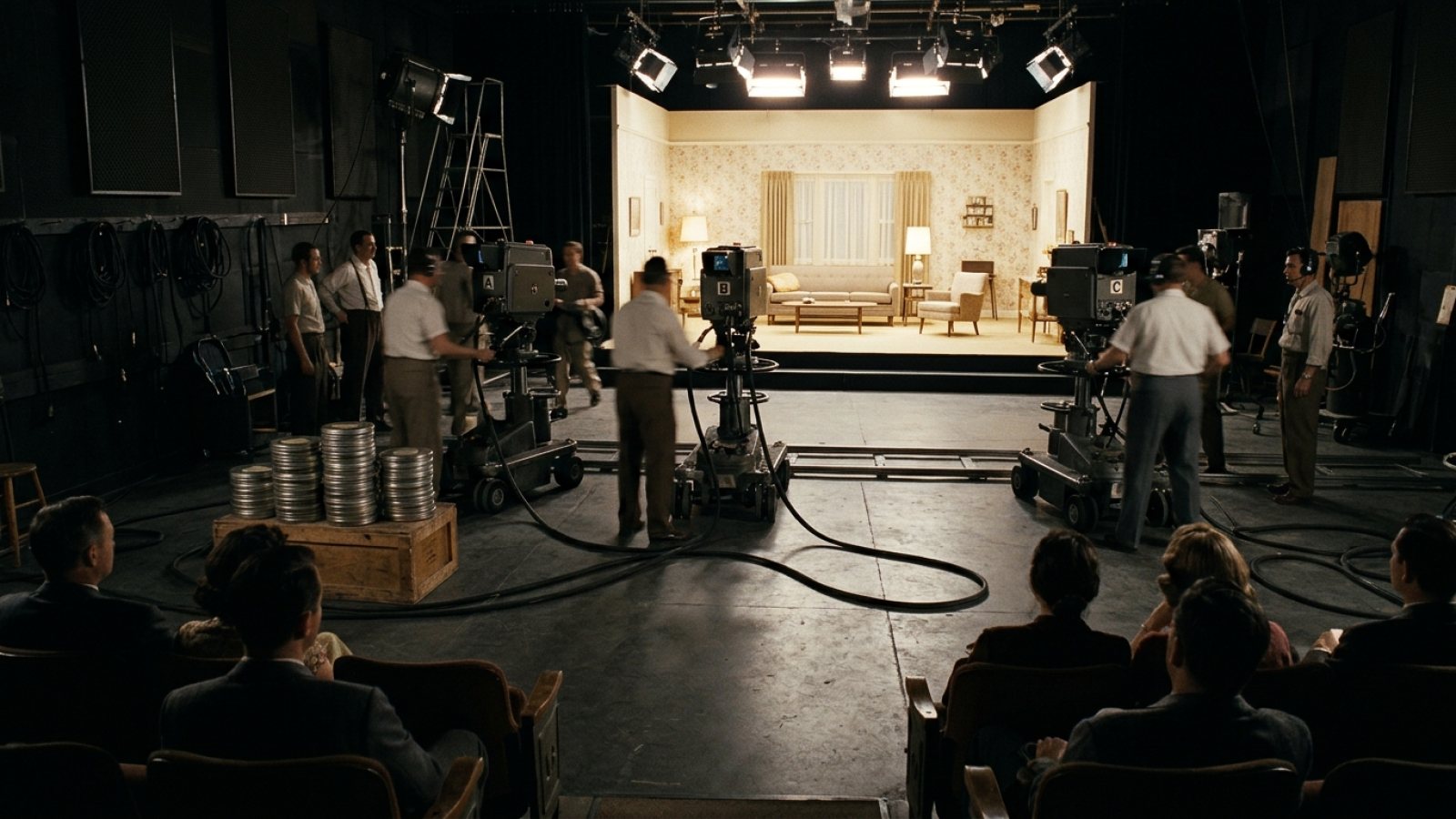
To truly capture the duo’s electric chemistry and Ball’s famously physical comedy, they needed a radical approach. Their director of photography, the legendary Karl Freund — an Oscar-winning cinematographer renowned for films like Metropolis and The Good Earth — devised a revolutionary three-camera system. This innovative setup allowed for continuous shooting from wide, medium, and close-up angles, capturing every nuance of a performance without interrupting the comedic flow. Crucially, it meant they could perform a scene straight through, much like a stage play, and still have the coverage for sophisticated editing later. Filming in front of a live studio audience, a concept executives found audacious given the challenges of maintaining continuity and control, became the final ingredient. This blend of theatrical immediacy and cinematic quality gave birth to the multi-camera sitcom format, establishing the blueprint that would dominate television for generations.
The Enduring Power of 35mm
The decision to film on 35mm celluloid, rather than the industry-standard kinescope, was another stroke of genius, one primarily championed by Desi Arnaz, and born out of a shrewd financial gambit. CBS initially balked at the significantly higher cost of shooting on film compared to a live broadcast. In a pivotal deal, Desilu Productions – Ball and Arnaz’s own, groundbreaking studio – agreed to absorb the additional filming expenses, but only in exchange for retaining full ownership of every episode. This move, initially a financial burden for Desilu, became an unforeseen goldmine, fundamentally altering the economics of television production.
Unlike fleeting live broadcasts or quickly degrading kinescopes, 35mm film offered pristine picture quality, perfect for repeated viewing. This meant that each I Love Lucy episode was transformed from an ephemeral broadcast into a durable, re-airable asset. The concept of "reruns" was virtually unknown, and certainly not profitable, before this. With a library of high-quality episodes under their control, Desilu could license I Love Lucy for syndication to local stations across the country, long after its initial network run. This wasn't merely a revenue stream; it was a river, turning Desilu into a production powerhouse and establishing a new paradigm where content ownership became as valuable, if not more so, than the original broadcast, fueling a massive secondary market for television programming.
The Blueprint for a Century
The ripple effects of Desilu’s innovations cannot be overstated. From The Dick Van Dyke Show to The Mary Tyler Moore Show, Seinfeld to Friends, the three-camera, live studio audience format became the default for the American sitcom, shaping comedic timing, character interactions, and the very architecture of television storytelling. Performers learned to "play to the cameras" while still feeding off the energy of a live crowd. Moreover, the precedent set by Desilu’s ownership model empowered countless other creators and studios, demonstrating the long-term value of intellectual property in a rapidly expanding entertainment landscape.
I Love Lucy wasn't just a hit show; it was a foundational text, a technical and financial blueprint that allowed comedy to thrive on the small screen, making its unforgettable characters and iconic physical comedy available to generations long after its original run. Today, almost 75 years later, the laughter of Lucy, Ricky, Fred, and Ethel still echoes from screens around the world. It’s a testament not just to the indelible comedic genius of its stars, but to the pioneering spirit behind the cameras, the bold gamble on film ownership, and the timeless vision that ensured a good joke, once told, could be heard forever. This single show didn't just entertain millions; it wrote the rulebook for how television comedy would be made, seen, and remembered.
