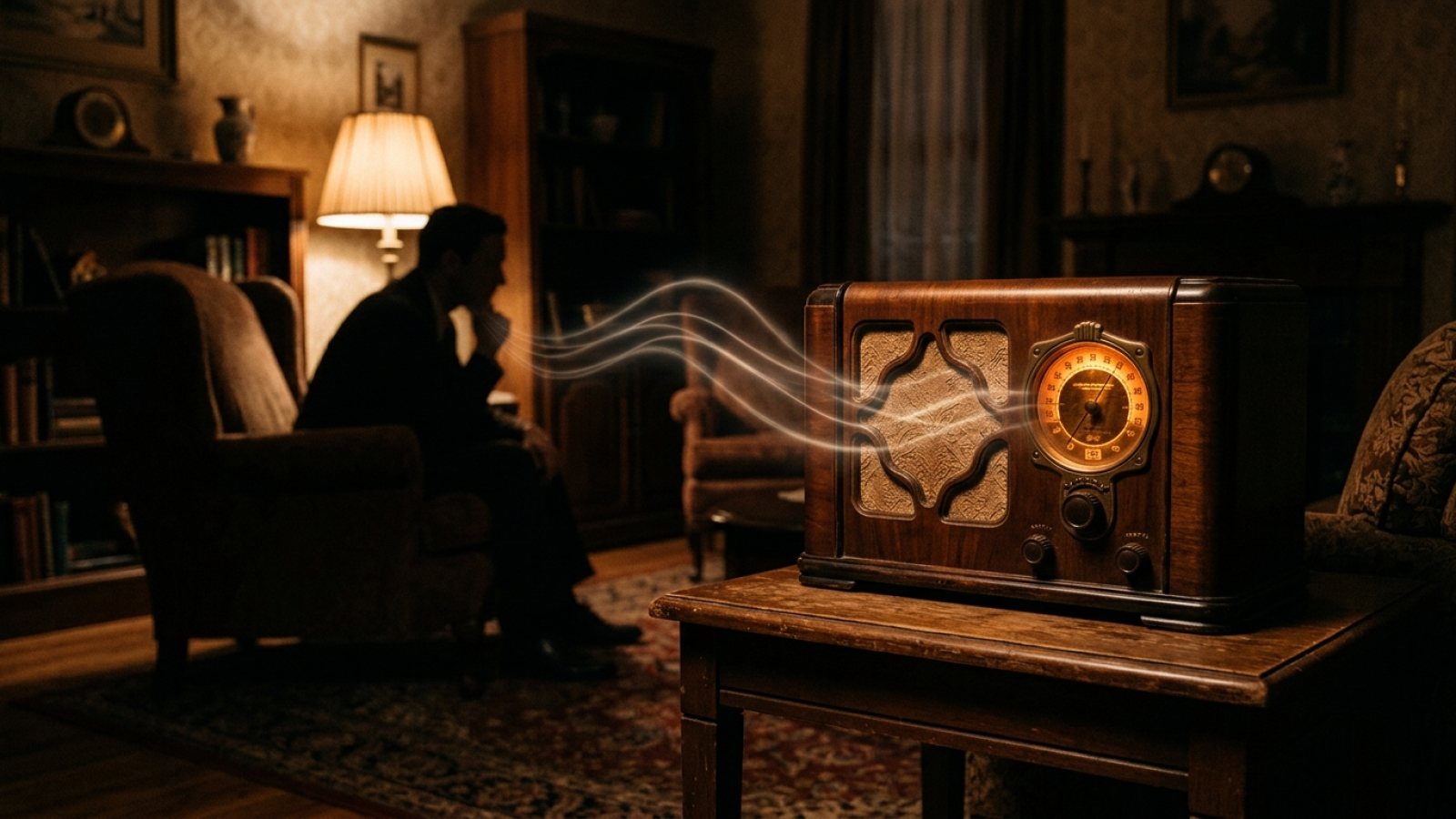
In the frantic, gag-a-minute world of early radio comedy, where every second cost money and every laugh track was a distant dream, one man dared to do… nothing. And it was absolutely brilliant. Jack Benny, the master of comedic timing, didn't just understand the power of a well-placed silence; he weaponized it, turning the simple pause into the most anticipated, and often biggest, laugh on the airwaves.
When Benny launched his first enduring radio program in 1932 (after a few earlier stints), the airwaves were still buzzing with the rapid-fire patter of vaudeville. Comedians like Fred Allen and Eddie Cantor delivered punchlines with machine-gun precision, their acts packed to the gills with jokes and musical numbers. Radio was a direct descendant of the stage, echoing its loud, broad strokes and ceaseless energy. But Benny, the self-effacing, perpetually 39-year-old violin virtuoso (who was neither self-effacing nor a virtuoso), had a different idea.
The Art of Anticipation
Benny's genius lay in his character. He wasn't just a comedian telling jokes; he was a character being funny. And his character – vain, cheap, easily flustered, and prone to endless self-aggrandizement – was perfectly served by the pause. Instead of rushing to a punchline, Benny would let the silence hang, letting his audience fill it with their knowledge of his persona. They knew what he was thinking, even if he didn't say it. This complicity made the eventual payoff, often a simple look or an understated line, all the more potent.
Consider the legendary routine where a mugger demands, “Your money or your life!” After a long, agonizing silence, Benny finally replies, “I’m thinking it over!” That pause, famously timed for what felt like an eternity, was not just empty space. It was a masterclass in character development, audience engagement, and punchline delivery. It allowed the audience to imagine Benny’s internal struggle: his miserliness battling his survival instinct. The laugh wasn't just at the line; it was at the agonizing, hilarious thought process the pause implied.
More Than Just Silence
What Benny introduced was a form of observational comedy long before the term became commonplace, but focused inward on a meticulously crafted character. He wasn't just performing; he was inviting you into the mind of Jack Benny. His ensemble cast – including the ever-loyal Rochester, the crooning Dennis Day, and the sardonic Mary Livingstone – often played straight to his pauses, reacting to his unspoken thoughts and giving the audience cues. This elevated his show, The Jack Benny Program, from a collection of gags to a weekly playlet where character and relationships drove the humor.
Benny’s timing was so precise, so ingrained in his delivery, that when his show transitioned seamlessly from radio to television in the 1950s, his comedic power remained undiminished. The visual medium only enhanced his non-verbal communication, allowing a raised eyebrow or a knowing glance to carry the same weight as his famous radio silences. He taught comedians that the spaces between the words could be as funny, if not funnier, than the words themselves.
A Legacy of Laughter
The impact of Benny’s revolutionary approach resonated across comedy for decades. His influence can be heard and seen in countless performers who understood the power of understatement and the comedic weight of character-driven humor. From Bob Newhart’s one-sided phone conversations, where the silence allowed the audience to imagine the other speaker, to Jerry Seinfeld's famous observational beats, where a pause allows the audience to nod in agreement with his premise, the ghost of Benny’s timing is ever present.
Jack Benny proved that comedy didn't have to be relentless. It could breathe, it could contemplate, and it could make an audience erupt in laughter not just from what was said, but from what was left unsaid. His legacy is a testament to the idea that sometimes, the greatest joke is the one you let the audience finish in their own minds.
